
Design as Hospitality: A Manifesto
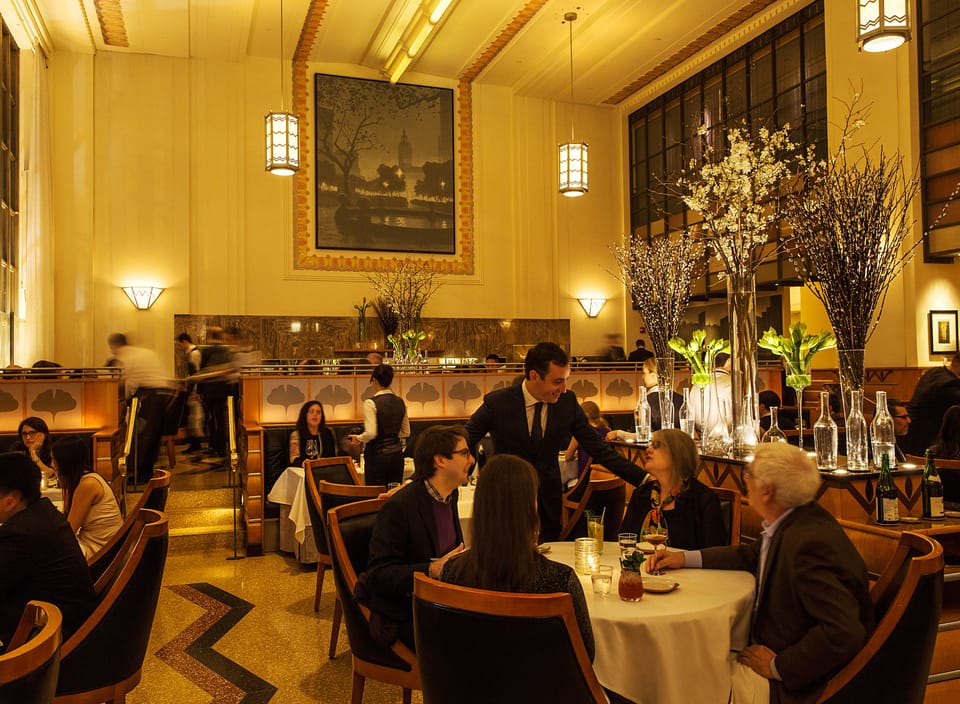
Guest and host come from the same word.
The Latin word hospes, and before that ghostis, held both meanings in a single root: the person who arrives and the person who receives.
From this one word, a family of words were born. Host, hostel, hotel, hospital, hospitality. They share an origin because they once shared a purpose: the care of someone who has crossed a threshold into unfamiliar territory.
But somewhere along the way these words diverged.
Hotels became places of comfort while hospitals became places of efficiency, hospitality became about luxury, and healthcare became about throughput.
But the original meaning held something different: mutual obligation, sacred duty, and moral virtue. In ancient cultures, taking in a stranger wasn't generosity; it was expected because if you needed shelter, you'd want someone to treat you the same.
We don't hear those words in healthcare anymore. This essay is about getting back to them, through design.
The Gap
There is a distance between what healthcare intends to do and what it actually feels like to receive it.
You've felt it before: The clipboard under fluorescent light, writing your name and date of birth for the third time that morning, getting called through a sliding window. Being told to wait but never told how long, and being discharged without being told what comes next.
None of this is cruelty, and most of it isn't even negligence. It's the natural shape of a system designed around compliance, liability, and operational efficiency. It's devolved into a system that has optimized for everything except the person at its center.
Even the language tells you. Patient comes from the Latin pati, meaning to suffer, to endure. To be patient is, by definition, to wait. The word itself assigns a passive role: you are the one who endures and the system acts upon you.
But there's another industry that welcomes people who are anxious, disoriented, and vulnerable, and solves it entirely differently: hospitality. Their incentives may be different, but healthcare has much to learn from it. After all, as mentioned, they come from the same essence.
What Hospitality Understands
Hospitality at its best is not about luxury. It's not about thread count or tasting menus. It's a discipline of care: the practice of making someone feel welcome and oriented when they're in a moment they didn't choose.
A great restaurant host reads the room before you sit down. Are you celebrating? Grieving? On a first date? Running late? They don't ask, they just notice and adjust. The corner table instead of the center one, water without being asked. A small decision that says, quietly "we see you, and we've thought about this."
Will Guidara ran Eleven Madison Park when it was named the best restaurant in the world, and he drew a distinction I keep coming back to. Service is a transaction: you asked, I delivered. Hospitality is how you make someone feel while you deliver it. Service gets the job done. Hospitality makes you want to come back.
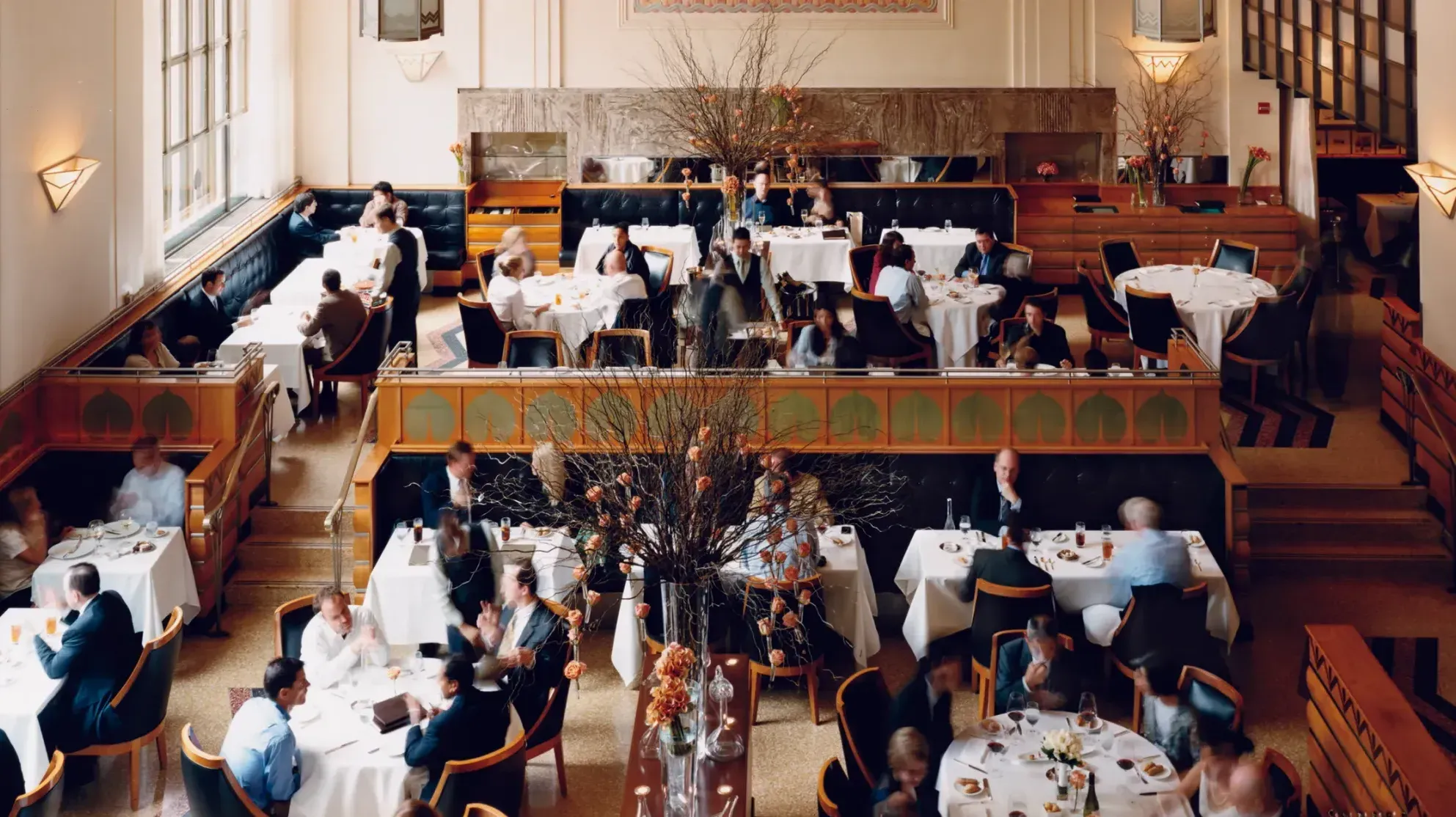
At Union Square Cafe, where Guidara started his career, a guest kept getting up mid-meal to feed her parking meter. So someone on the team started doing it for her, and then they made it standard practice for every guest. Guidara called these grace notes: small, anticipatory gestures that told the guest, "we thought about what you might need before you needed it."
Healthcare has mostly forgotten this. The experience around the core service is not peripheral. It shapes whether the person trusts you, returns to you, and follows through on what you've asked of them. The rituals of hospitality, the greeting, the orientation, the check-in, the graceful exit, are not ornamental. They're what make people feel held. And feeling held is what makes people trust you enough to actually listen.
Healthcare needs those same rituals.
The Framework
Design as Hospitality is not an aesthetic but a way of seeing, and it begins with a single premise: every person entering the healthcare system is crossing a threshold into a place they did not choose to be.
Once you accept that, the rest becomes clear.
Assume anxiety.
Every patient carries some degree of fear, uncertainty, or discomfort into every encounter. This is not an edge case, but the baseline to expect. Hospitality designs for the anxious guest and healthcare should too.
At Photon, we discovered that patients were replying to our SMS messages with questions they shouldn't have needed to ask. What happens next? When will it be ready? How much will it cost? Every unanswered question was a small failure of anticipation, a moment where anxiety filled the gap that information should have occupied.
So we redesigned the anatomy of a status update. Every message in 160 characters or fewer had to answer three things: what just happened, what happens next, and what you need to do. We compressed an entire orientation, collapsed all the various permutations and possibilities, into a clear and concise text message system, not because it was easy, but because the patient should never be left wondering.
Anticipate the anxiety, eliminate it before it becomes a problem, and standardize the grace note.
Design the threshold.
The first moment sets the emotional tone for everything that follows, whether that's walking into the clinic, opening the app, or receiving the diagnosis.
Hospitality obsesses over this: the lobby, the greeting, the first impression of the room. Healthcare often treats it as administrative. Check in, sit down, wait.
But a threshold is not a formality; it's a transition from one state to another, from well to unwell, from outside to inside, from autonomy to dependence. How someone is received in that moment shapes everything that comes after.
Orientation is care.
Telling someone what to expect, what's next, and how long it will take is not a logistical courtesy but an emotional one. Just remember the last time you felt lost and out of place. Disorientation is a form of abandonment.
When a person doesn't know what's happening to them or why, they don't engage with their care. What they do instead is they endure it. Think of the small things they do in hospitality to orient you: a good server tells you the courses with enough detail. A good hotel tells you where the elevator is after you check-in. These aren't interruptions but acts of care.
In healthcare, orientation might look like a text that says your prescription has been sent and will be ready by 3pm, or a nurse who walks you through the next two weeks and follows up instead of handing you a printout. Small things, but not small at all.
The guest never feels the kitchen.
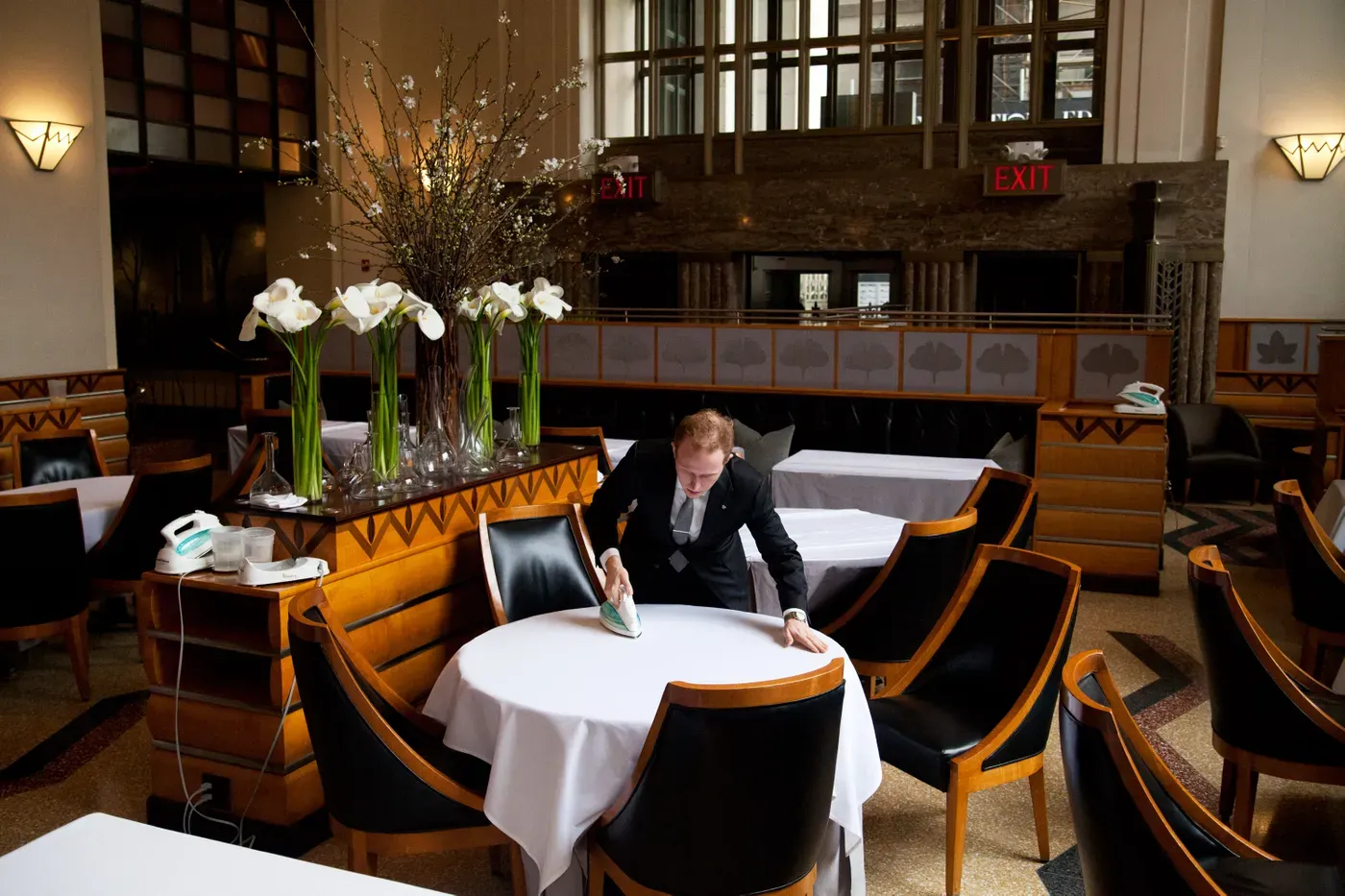
Eleven Madison Park had a concept called the one-inch rule. The person plating the final dish was the last in a long chain of effort: sourcing, preparation, cooking, storytelling. If the placement was off by an inch, the entire chain was compromised. But the guest never sees the chaos behind the kitchen doors. The guest only knows whether the food arrived beautifully, on time, and delicious.
Healthcare is full of kitchens: Insurance verification, prior authorizations, pharmacy transfers, stock checks, referral coordination. The complexity is real and immense, but none of it is the patient's responsibility to manage.
At Photon, we mapped every step of the prescription process and sorted every scenario into three buckets: everything is fine, there's an issue and the patient needs to act, or there's an issue and the patient just needs to wait. We built tools, human agents and AI agents working together, to process every order the exact same way whether there were ten or ten thousand. Then we communicated just enough, at just the right time, so the patient only ever saw the plated dish.
That's what orchestration looks like in practice. You follow through on every step, you absorb the complexity, and you protect the patient from ever having to feel the kitchen.
Finish strong.
The one-inch rule applies at the end too. The handoff between provider and home, between one care team and another, between diagnosis and treatment, between filling the prescription and actually taking it. These are the seams where people fall through.
Hospitality designs for transitions: the checkout, the follow-up note, the question was everything to your liking? Healthcare often just ends. You're discharged, you leave, and you figure it out.
The last touchpoint is not the least important but may be the most. It's the difference between a patient who follows through and one who drops off.
Small gestures signal care.
At Eleven Madison Park, they kept what they called a one-plus card. Guests often asked the same kinds of questions, about the cheese, the art on the walls, and especially the plates, which they'd flip over to see who made them. (I still do this to this day, and have literally bought a teapot used in Sant Ambroeus in New York because I looked under it to see which brand it was). So EMP printed elegant index cards with the answers to these common questions on heavy paper with beautiful typography and handed them to the guests as a gift when they see them look around during service.
This was so powerful that what people remembered most wasn't the meal; it was the card.
In healthcare, the equivalent might be a prescription experience that shows you the price before you commit, generates a coupon card automatically, and asks when you actually need the medication. Not because any single feature is revolutionary, but because the combination of them, delivered at the right moment, tells the patient: someone thought about this for you.
The ideal healthcare experience is not needing care at all. But people get sick, people need prescriptions, people undergo procedures. And when they do, the distance between terrible and decent is often not clinical, it's experiential. It's the accumulation of small, well-timed gestures that lower stress and move people toward the outcome they actually care about.
There is no upper bound to user experience. The work is never finished. You just keep closing the gap.
Why this matters
This is not about aesthetics, and it's not about making healthcare feel nice.
When patients feel disoriented they disengage, and when they don't understand what's happening they don't follow treatment plans. When the experience is confusing or cold they don't come back, or they delay until the problem is worse. When they feel processed instead of cared for, they lose trust. And trust is what every clinical outcome depends on.
The business case is there too: when we design with hospitality in mind, we build retention, adherence, and word of mouth. But the business case while important is secondary. The primary case is moral. These are people at their most vulnerable and they deserve the same rigor applied to their experience as to their diagnosis.
That said, we can wax poetic about this endlessly; after all if morality was all that mattered and not business, healthcare may have already been fixed by now. But part of Design as Hospitality is also designing the business model and the incentive structure as much as we do the experience. We don't separate interface design from behavior design. Rather, they are reinforcing pieces of one another and inextricably linked to deliver the experience we want.
This matters because not only because it's our sacred obligation, but because we can't call ourselves true designers simply by designing the one piece we like and leaving the rest to fate. It's like being an architect who only cared about blueprints, or a musician who only cared about one underlying chord. There may be a lot of individual components that are necessary in creating something special, but the totality of something, a building, a painting, a song, that's what makes it great, and that's what ultimately endures.
The work ahead
One chef does not make a restaurant just as one designer does not make a company or one entrepreneur an entire massive business. Hospitality is a culture, not a role. It's the collective decisions, made by everyone who touches the patient's journey, that this experience will be worthy of the trust someone has placed in it.
"Design as Hospitality" is a concept the best caregivers have always practiced: anticipating need, orchestrating complexity, and elevating moments of vulnerability into moments of trust. What's new is the argument that it can be systematized. That it can be designed. That it can be borrowed from the industries that have already solved these problems, from hospitality, aviation, retail, and architecture, and applied with rigor to the industry where the stakes are highest and the experience is often the worst.
This is the work of Feel Eternity: to study the patterns, to bring perspectives from outside healthcare's walls because the best ideas for how to welcome a sick person might come from a hotel lobby or an airline gate or a restaurant kitchen, and to build playbooks for anyone who wants to close the gap between clinical intention and human experience. And to keep returning to the root of it all: the idea, as old as the word itself, that when a stranger crosses your threshold, you owe them something. Not just your competence or your efficiency, but your full attention, your anticipation, and your care.
Find one thing in your process, one threshold or transition or message or handoff, that you can design better. Subtract it to its essence, and deliver hospitality.
Anticipate. Orchestrate. Elevate.
That's what care feels like.
Jomi Cubol is the founder of Feel Eternity and the Head of Member Experience and Design at Harbor Health. He has spent a decade designing healthcare experiences at Thirty Madison, Balanced, Photon Health, Harbor Health, and building new consumer businesses for world-renowned brands like GQ, Wired, and Architectural Digest.
Want essays like this in your inbox? Subscribe for free below.