
The Residential Instinct

The Room That Knows You Are Not From Here
A woman checks into a hotel in a city she has never visited.
She's been traveling for nine hours and her body carries that particular fatigue of airports and unfamiliar transit systems, the kind that settles behind the eyes and makes every new environment feel like one more thing to decode. The lobby is beautiful, which she expected because she read the reviews. But what she did not expect is what happens when she opens the door to her room.
The lighting is not the flat overhead wash she has learned to associate with hotels but something layered and warm, closer to what she might find in a friend's apartment on a Sunday evening. The furniture has not been bolted to the floor or arranged in the symmetrical grid that makes housekeeping efficient; it sits the way a person who actually lived here might have placed it, slightly asymmetrical, a reading chair angled toward the window rather than facing the television.
There are books on the shelf and they are not the decorative spines that exist to be photographed but actual titles someone chose as if the room had been curated by a person with taste rather than assembled by a procurement team with a catalog.
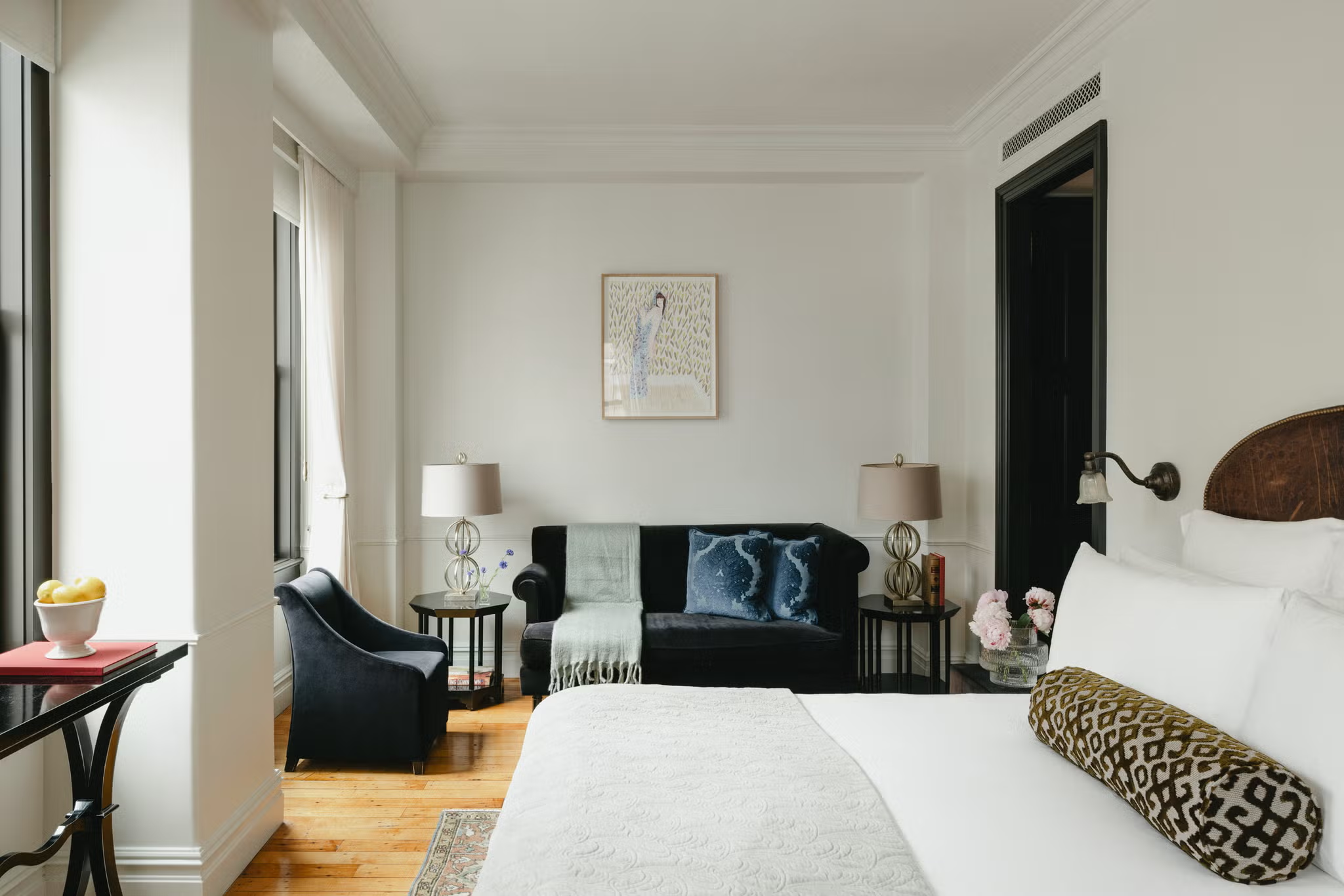
She cannot articulate why this matters, but her shoulders drop. Something in her nervous system registers, before her conscious mind catches up, that the space around her was organized with her comfort as the central principle rather than the hotel's operational convenience.
She is experiencing the difference between a commercial environment and a residential one. And that difference, which appears on the surface to be an aesthetic choice, is actually a philosophical commitment that most of the hospitality industry gets wrong and that healthcare has barely begun to consider.
The Space Tells You Who It Was Built For
The distinction between a commercial environment and a residential one lives in a single question: who does the room announce itself to be serving?
A commercial hotel room is designed for the operation. The furniture is durable and uniform because it needs to survive thousands of turnovers. The layout prioritizes housekeeping speed because labor costs compress margins. The lighting is bright enough to inspect because quality control requires visibility. Everything about the space, from the plastic-wrapped glasses on the bathroom counter to the laminated card explaining the pillow menu, communicates that the room belongs to the system and the guest is passing through it.
A residential hotel room inverts this relationship.
The furniture has texture and personality because the guest's sensory experience is the organizing value. The layout creates the feeling of a private apartment because the psychological shift from “I am in an institution” to “I am somewhere that feels like mine” changes how a person breathes, sleeps, and moves through their evening. The lighting creates mood rather than ensuring inspectability. Everything about the space communicates that it belongs, even if temporarily, to the person inside it.
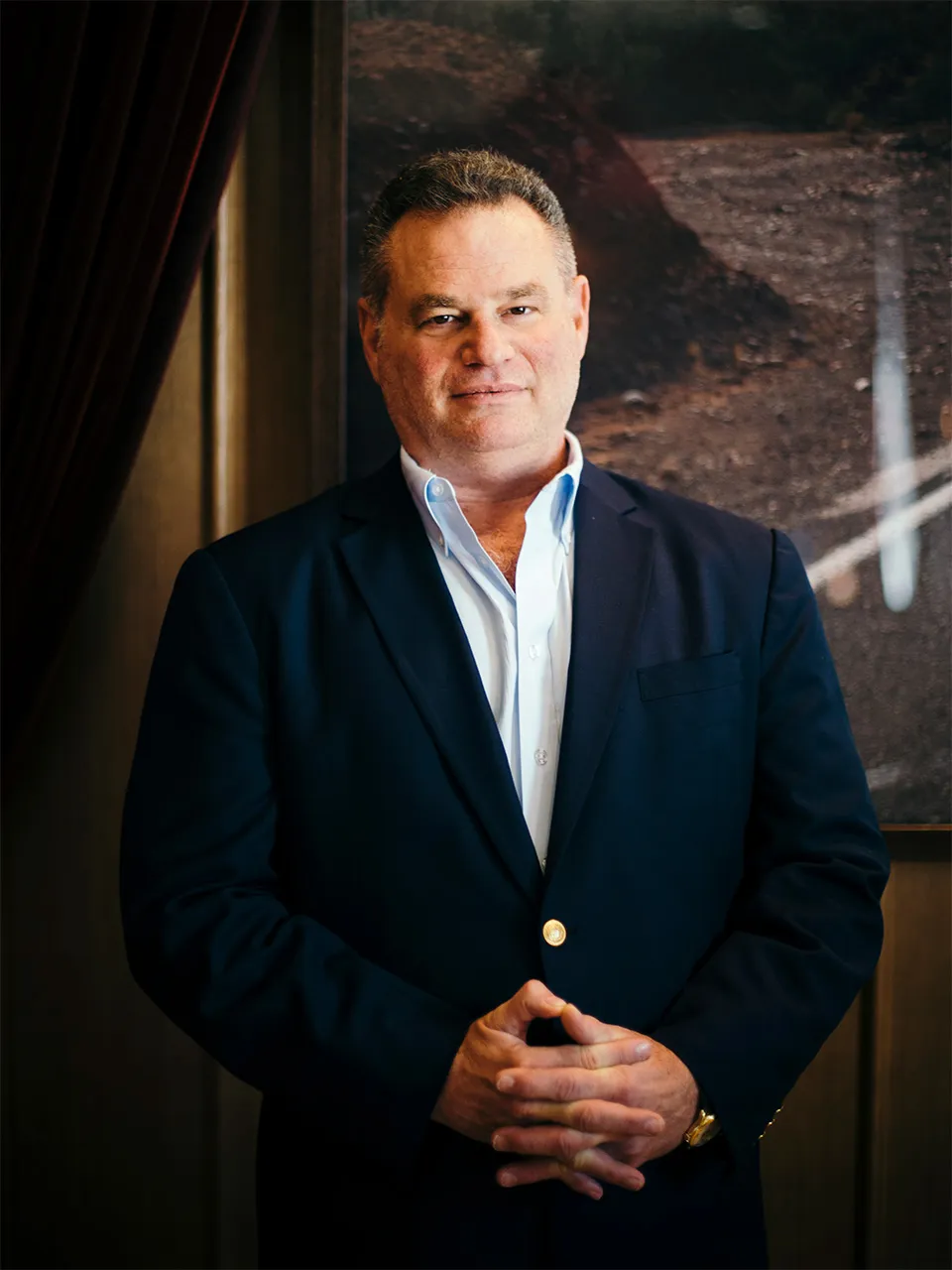
Andrew Zobler, the founder and CEO of New York's Sydell Group, has built his entire career on this inversion.
Hotelier Andrew Zobler shares his blueprint for scaling up in hospitality without losing brand appeal
The company behind Nomad Hotels, The Ned, The Line, and Freehand operates from a conviction so elemental, it risks being underestimated: a hotel should feel like a great home. Not a home in the aspirational curated sense that design magazines tend to project, but a home in the immediate sensory sense, where the textures and the light and the arrangement of objects and the warmth of the people around you combine to produce the unmistakable feeling that you are somewhere designed for living.
The principle sounds simple. Its execution reveals a set of design decisions that healthcare operators would benefit from studying with care.
Consistency of Feeling Does Not Require Consistency of Script
The first and perhaps most counterintuitive element of Sydell's model is its approach to service.
Most hospitality companies that operate at any meaningful scale rely on scripted interactions: standardized greetings, predetermined responses to common guest situations, brand-approved language designed to ensure that every person at every property receives the same verbal experience. The logic is straightforward and, on the surface, persuasive. If you want consistency, you standardize the inputs.
Sydell does the opposite. The company does not script its staff. Instead, it immerses new employees in the history of the brand, its values, and the specific intentions behind how each property was conceived, and then it trusts them to bring themselves to the work.
When Nomad opens a new property (a Singapore outpost is planned for later this year), Sydell sends employees from existing locations to spend time with the incoming team. They are not there to deliver a training curriculum or walk through a service manual. They are there to model, through their own behavior, the instincts and rhythms that make a Nomad feel like a Nomad. Culture, in this framework, transfers through proximity and embodied example rather than through documentation.
This reflects a fundamentally different theory of what a service standard actually is. Sydell's bet is that genuine warmth cannot be manufactured through scripted language and that the person on the receiving end can always sense the difference between someone following instructions and someone operating from internalized values. Consistency of feeling, which is what a guest actually remembers, requires consistency of values rather than consistency of words.
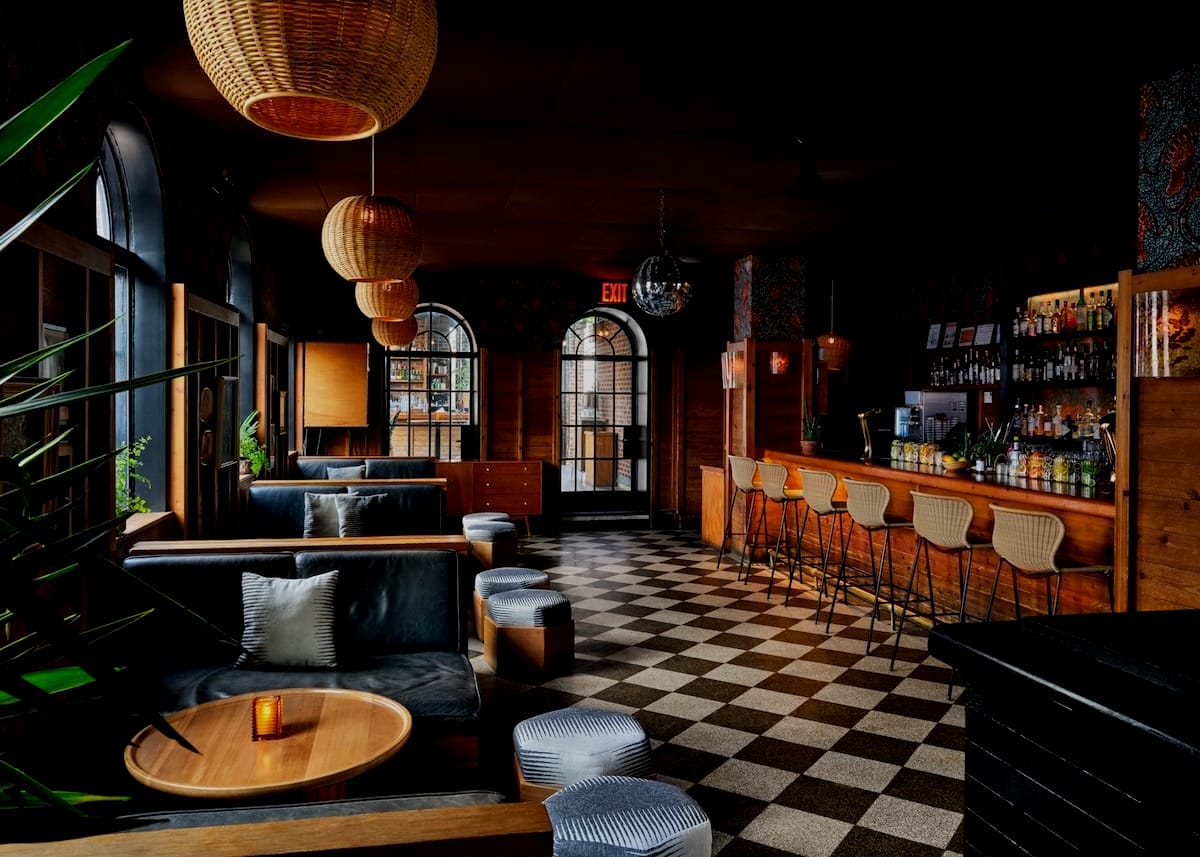
The company does not script its staff.
Instead, it immerses new employees in the history of the brand, its values, and the specific intentions behind how each property was conceived, and then it trusts them to bring themselves to the work.
Healthcare has an enormous amount to learn from this distinction.
The industry's default response to every patient experience initiative, every acquisition, every new system rollout, is to standardize the script. Staff receive language guides with approved phrases for greeting patients, templated responses for common complaints, and communication frameworks designed to ensure uniformity across locations. The assumption embedded in all of this is that if you control the words, you control the experience. But what Sydell's model demonstrates is that the experience lives downstream of the values, not downstream of the vocabulary.
A staff member who has been immersed in a philosophy of care and given the freedom to express it in their own way will produce something warmer, more genuine, and more memorable than a staff member reciting lines that someone in a corporate office wrote for them.
The Chemistry Between Different Kinds of People Is the Product
The second principle worth studying is Sydell's approach to who fills the room.
Zobler has spoken openly about why Nomad Hotels maintain a deliberate range of room types, from large and luxurious suites to smaller and more affordable options that a younger traveler on a tighter budget can reach. The reason extends well beyond market capture.
Zobler's conviction is that the chemistry between different kinds of people, the 25-year-old freelancer and the 60-year-old regular, the traveler who flew in that morning and the neighborhood local who walks over for dinner every Thursday, is itself a core ingredient in what makes the space feel alive. A room filled exclusively with one kind of guest has a particular atmosphere, and it is almost always a static one. A room where different kinds of lives are intersecting has energy, and that energy is part of what people come back for.

Most luxury hospitality operators struggle to achieve this mix because their pricing structures prevent it. When every room is large and every restaurant is expensive, the result is a beautiful space populated exclusively by people who can afford beautiful spaces. Sydell's deliberate inclusion of entry-level price points is a design decision that wears the clothes of a pricing decision, because it produces the social texture that no amount of interior design can replicate on its own.
Healthcare environments are, by their nature, already places where different kinds of people converge. A primary care clinic waiting room on any given Tuesday morning contains the anxious first-time patient sitting beside the elderly regular who knows the receptionist by name, the parent with a feverish child beside the person who scheduled a routine physical but cannot stop thinking about the test results from last month. The diversity of human experience is already present.
What is almost never present is a care environment that treats this convergence as something worth honoring through design rather than something to be managed through queuing and triage protocols. The waiting room has every ingredient it needs to feel like a commons, a shared space where the variety of human need creates a kind of quiet solidarity. Instead, it almost always feels like a holding pen.
Humility Is a Design Decision
The third principle is the one most likely to be dismissed by operators focused on growth and most likely to determine whether a care environment earns lasting trust.
Zobler describes Sydell's posture toward the neighborhoods where its hotels open in terms of humility. The company treats the surrounding community as essential to the property's identity rather than as an audience to be impressed by its arrival. Regular guests are remembered and accommodated with a specificity that feels personal rather than transactional (Nomad's team researches who is coming through the door so they can greet each person with some knowledge of who they are).
The restaurants are priced and designed to serve locals alongside guests. The hotel positions itself as a participant in the life of the neighborhood rather than an event that expects the neighborhood to reorganize around it.

This posture produces something that no amount of architectural investment can manufacture on its own: the feeling that the place you are inside is part of a real community. When neighborhood residents frequent a hotel's restaurant, they carry with them a quality of ease and familiarity that shifts the atmosphere for everyone in the room. The space stops registering as something built for visitors and begins to feel like something that belongs to the people who live nearby. That shift, subtle as it is, changes how every person in the room experiences the environment.
Healthcare clinics exist in neighborhoods too, and the ones that feel best, the ones patients describe with a loyalty usually reserved for a favorite restaurant or a trusted barber, almost always carry this quality of embeddedness.
The receptionist knows the patient's name not because the EHR surfaced it on the screen but because they have greeted each other across the same desk for years. The waiting room has a character shaped by the community it serves rather than by the system's brand guidelines. The clinic feels like it grew out of the block rather than being installed on it.
When a health system opens a new location or acquires an existing practice, the question of how it positions itself in relation to the surrounding community, whether it arrives with humility or with signage, will shape whether it ever earns the kind of trust that makes the clinical relationship possible.
The Incentives That Make the Instinct Possible
None of these principles would matter if they did not work commercially, and this is where the translation from hospitality to healthcare requires honesty about the structures underneath.
Sydell's residential instinct succeeds because hospitality economics reward it directly. A guest who feels at home returns. A neighborhood regular who becomes a fixture at the restaurant generates recurring revenue and brings friends. A community that embraces the hotel as its own drives a quality of word-of-mouth that no marketing budget can replicate. The financial model and the experience philosophy point in the same direction.
Hilton's acquisition of a majority interest in Sydell in 2024 is itself a form of proof. One of the world's largest hotel companies invested in the Sydell Group not to absorb its properties into the existing Hilton brand architecture but to give the Sydell philosophy better infrastructure: a global balance sheet, a worldwide distribution network, and relationships with property developers on every continent. Hilton recognized that the value lived in the philosophy and in the people who carried it, and that the most productive use of its scale was to serve as the operational engine that let the residential instinct travel to new cities without losing its character in transit. The model was already proven; what it needed was a bigger foundation to stand on.
Healthcare's dominant fee-for-service payment structure does not create this kind of alignment between experience and revenue. The financial case for warmth becomes abstract in any model where the payer's interests and the patient's experience are tracked separately.
A clinic can be cold, confusing, and impersonal and still generate the same reimbursement as one that makes every person who walks through the door feel expected. This structural reality explains why most care environments feel commercial rather than residential, why they are organized around the system's workflow rather than the patient's emotional arc through a visit. The incentives are the design, and fee-for-service incentives design for throughput.
But the structural picture is shifting in ways that matter. Value-based care models, direct primary care practices, and the growing market for elective and concierge services all create conditions where the patient's experience of care directly affects retention, referrals, and long-term revenue. In these models, the alignment between economics and experience begins to mirror what hospitality has always enjoyed. When a practice's viability depends on people choosing to stay, choosing to refer their families, choosing to engage with their own health over years rather than episodes, the residential instinct stops being a philosophical luxury and becomes a competitive necessity.
What Care Feels Like When the Room Is Designed for Living
Imagine a primary care clinic built on the residential instinct.
The lighting is warm and layered rather than the overhead fluorescent wash that announces, before a word is spoken, that you have entered a medical facility. The waiting area is arranged with the spatial logic of a living room, with furniture that invites settling in rather than perching at the edge of a chair, because someone understood that a person who is comfortable in their body will be more present in their clinical conversation.
The staff greet patients not from a script but from an immersion in a philosophy of care that has become second nature, and each greeting carries the texture of recognition rather than the polish of performance. The clinic is known in its neighborhood not as a place where people go when they are sick but as a place that belongs to the community, the way a good restaurant or a well-loved bookstore belongs to the block it sits on.
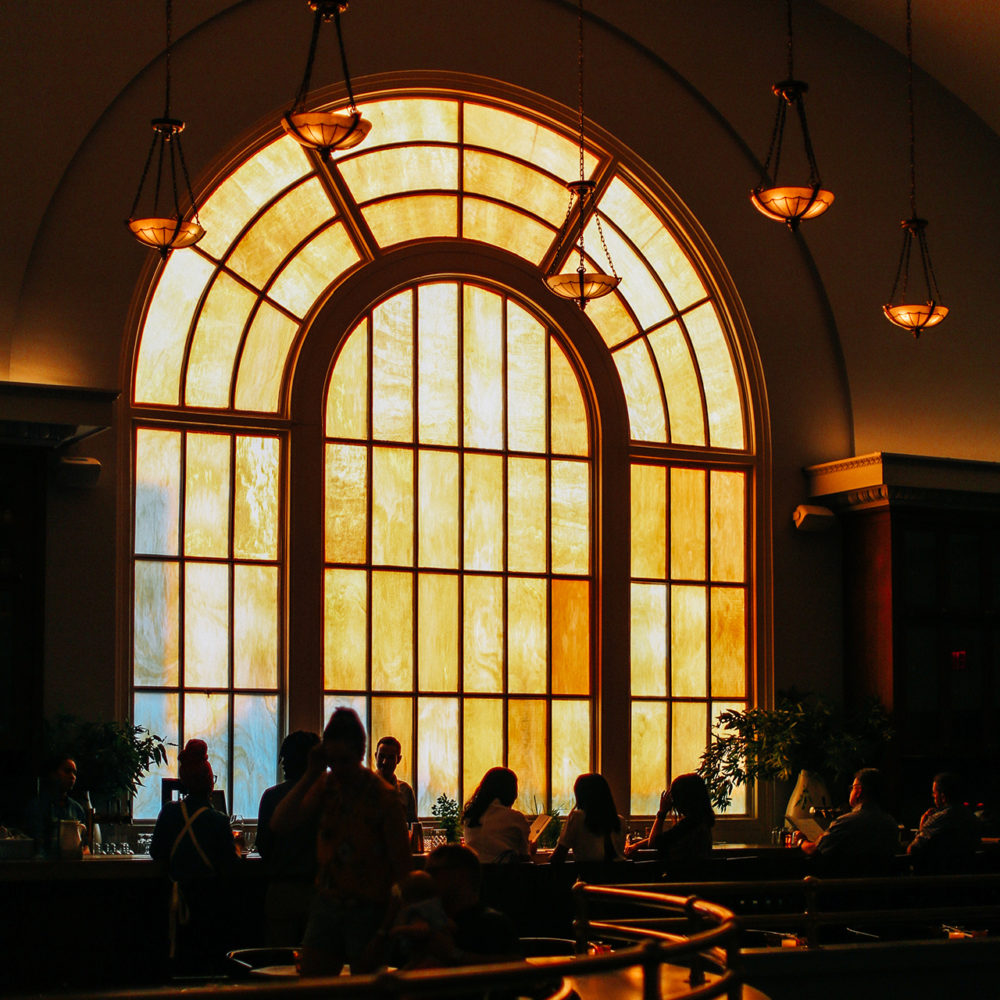
The person receiving care walks through the door and something happens before the clinical encounter begins. The space itself, through its lighting and its furniture and the way the person at the front desk looks up and says their name, communicates that it was designed for the human being inside it rather than for the system that operates around it. The threshold has done its work. And the conversation that follows, the one about symptoms and concerns and the quiet fears that only surface when someone feels safe enough to voice them, begins not at the deficit of anxiety that most care environments impose but at the place where care, in the deepest and oldest sense of the word, has already started.
Healthcare has spent decades building environments that belong to the system. The opportunity, for the operators and designers willing to reach for it, is to build care environments that feel like they belong to the people who walk through their doors.
Feel Eternity is a magazine about what care feels like, written for people who are trying to change that. Subscribe to receive every new piece.